
GHC STORE
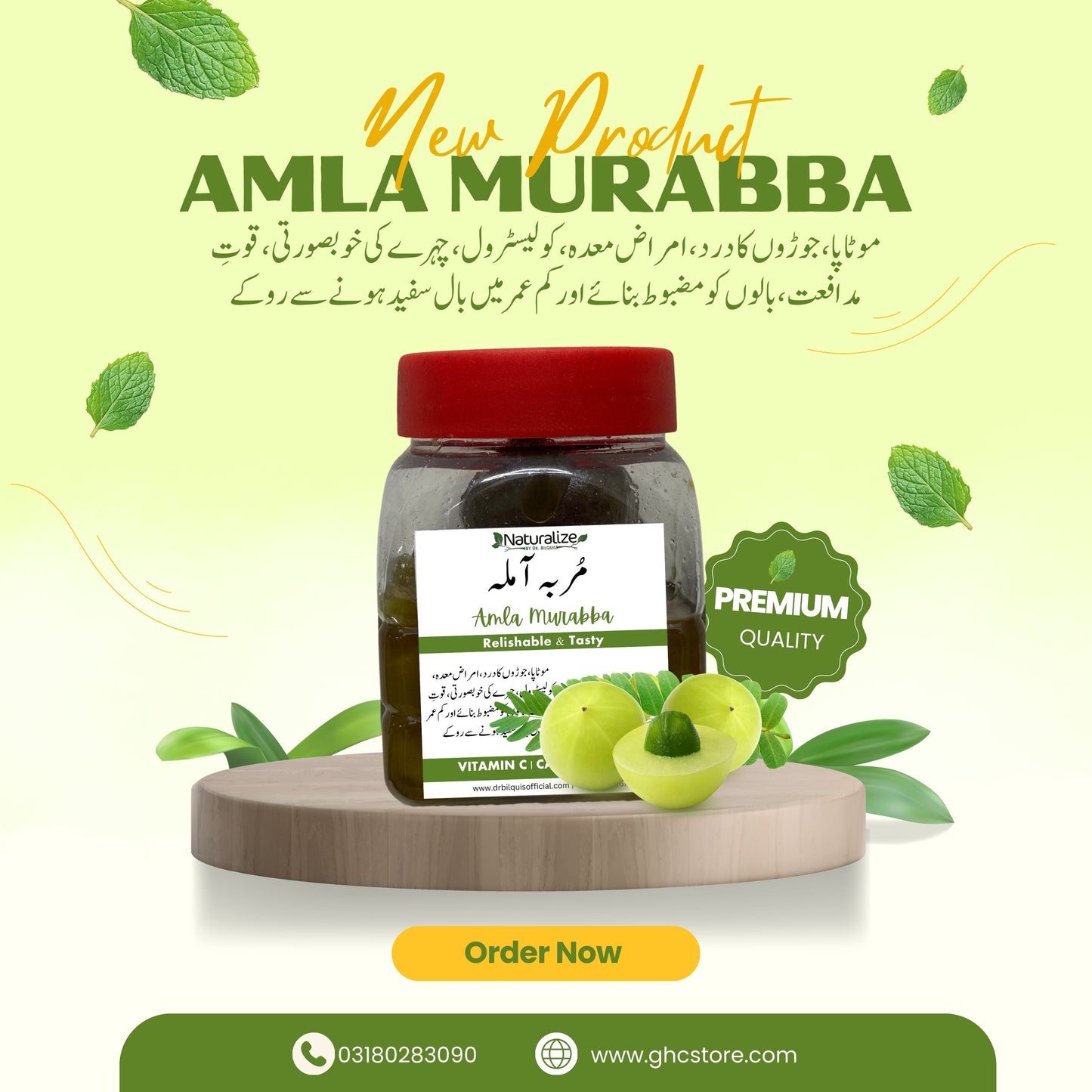
Amla Murabba
Amla Murabba
Couldn't load pickup availability
-
What Is Amla Murabba
Amla Murabba is a sweet preserve made by cooking Amla, also known as Indian Gooseberry, in sugar syrup until it softens and absorbs the sweetness while keeping its natural tangy flavor underneath. The texture ends up soft yet slightly firm, and the taste is a mix of sweet and tart, which honestly is part of what makes it so addictive once you get used to it.
This kind of preserve has been part of traditional South Asian kitchens for a very long time, mostly because Amla on its own is quite sour and hard to eat raw for most people. Turning it into a Murabba makes it not just easier to eat but also something people genuinely look forward to having every morning.
What It Is Used For
The main reason Amla Murabba has stayed popular through generations comes down to digestion. Amla has a natural reputation for being gentle on the stomach and helping with regularity, and the Murabba form makes that benefit easy to consume daily without much effort.
Beyond digestion, Amla is widely known for its high natural vitamin C content, which ties directly into immunity. A lot of families keep a jar around specifically for the colder months when colds and general weakness tend to go up. It is also commonly linked to liver health and is sometimes given to people recovering from illness since it is gentle yet nourishing.
Here is a look at what people commonly use Amla Murabba for:
-
Supporting digestion and regularity
-
Boosting immunity through natural vitamin C
-
Supporting liver health
-
Helping with eye health over time
-
Supporting healthy skin and complexion
-
Helping with hair strength and shine
-
Supporting heart health
-
Helping manage blood sugar in some cases
-
General nourishment during recovery from illness
Who Should Eat Amla Murabba
This is genuinely something the whole family can eat. Kids often enjoy it because of the sweetness, while adults appreciate the digestive and immunity benefits that come along with that taste. Older family members frequently keep a jar around specifically because it feels gentle on the stomach compared to a lot of other supplements.
Pregnant women have traditionally used small amounts of Amla Murabba too, though as always, checking with a doctor first is a smart move, especially since it does contain natural sugar that matters for anyone managing blood sugar levels closely.
How to Eat Amla Murabba
The most common way is simply eating one or two pieces straight from the jar, usually in the morning on an empty stomach. Some people prefer having it after a meal instead if their stomach feels sensitive first thing in the day. There really is no strict rule here, it comes down to what feels right for you.
A few households also chop it up and mix it into yogurt or even pair it with a piece of bread, though the traditional way of just eating it plain with a small spoon remains the most common method across most families.
How Much and How Often
One to two pieces a day is generally considered a good amount for regular use. Some people eat it daily without fail, especially through the year, while others keep it more for the winter months when immunity support feels more relevant. Either way works fine depending on your routine and what your body responds to best.
Children can also have a smaller piece, though portion size really should depend on age and what feels appropriate, so use your judgment or check with a pediatrician if you are unsure.
Storage Tips
Keep the jar tightly sealed and store it in a cool dry place, away from direct sunlight. Once opened, using a clean dry spoon every single time really matters here, since any moisture or contamination can cause the syrup to spoil faster than expected. Some people prefer refrigerating it after opening, especially in hot weather, just to extend its shelf life a bit longer.
Spotting Good Quality Amla Murabba
A good quality Amla Murabba should have a glossy, slightly translucent look to the fruit pieces, sitting in a thick but clear syrup, not cloudy or overly thick. The taste should balance sweet and tangy without feeling artificially sugary. If the syrup smells off or looks unusually dark, the batch might be old or made with lower quality ingredients.
GHC Store prepares Amla Murabba using the traditional slow cooking method without relying on artificial preservatives or excessive added sugar beyond what is needed for the natural preserving process. What you get in the 250gm jar reflects how this has always been made at home, just done at a slightly larger scale.
A Bit of Honest Talk
I think people sometimes expect a Murabba to taste purely sweet like a regular jam, and that surprises them a little since Amla keeps its tang even after the sugar cooking process. That sourness is actually a good sign, it means the natural properties of the fruit are still intact rather than completely masked by sugar.
This is not something that fixes digestion or immunity overnight either. Eating it consistently over weeks tends to show better results than having it randomly once in a while and expecting instant change.
That is pretty much it I guess. Amla Murabba has held its place in kitchens for a long time, not because of trends but because it genuinely does something useful while still feeling like a comforting little treat each morning. It always turns out a bit different depending on how it is made, but that tangy sweet bite tends to stay familiar no matter which kitchen it comes from.
-
Share