
GHC STORE
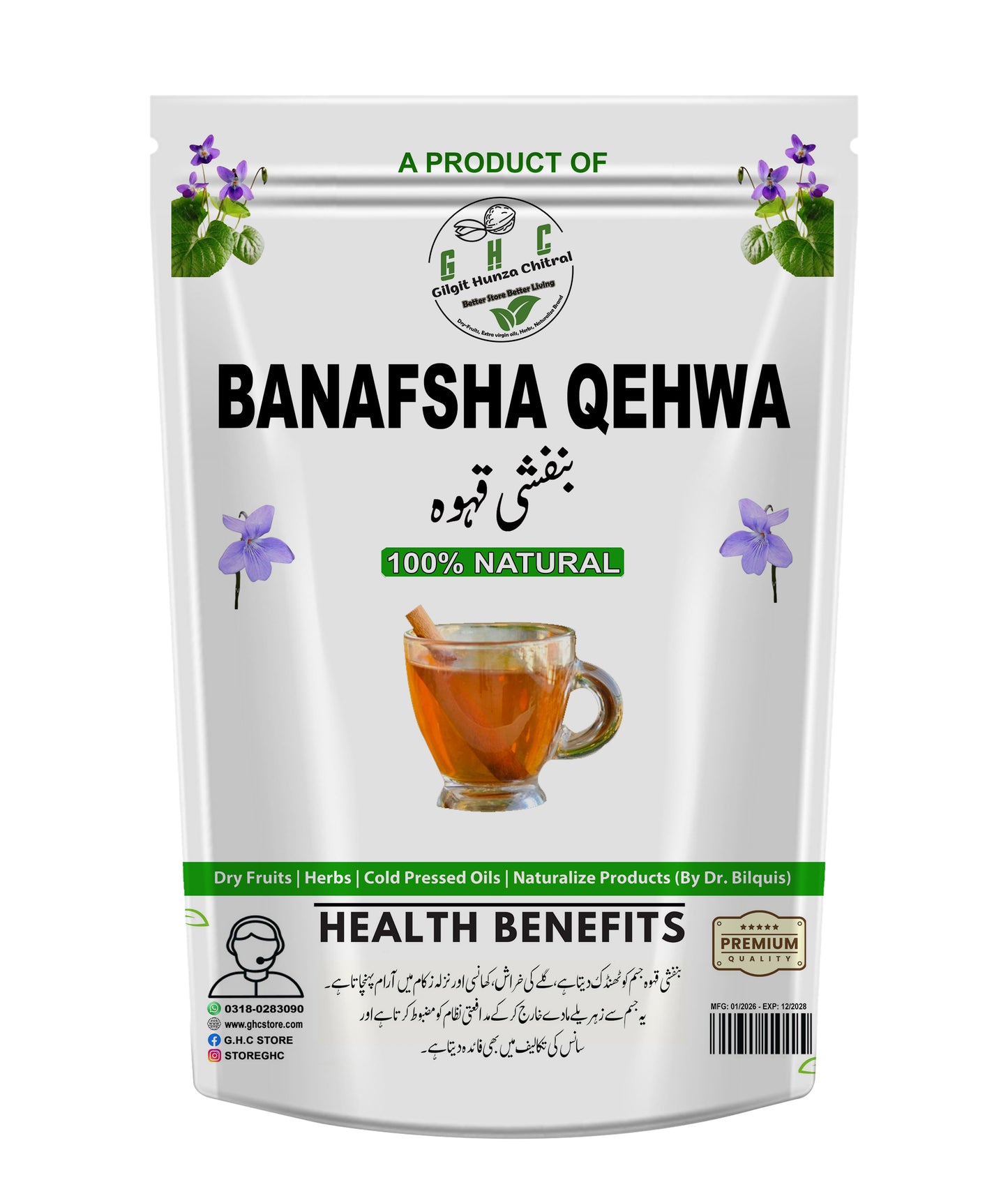
Banafsha Qehwa 50gm
Banafsha Qehwa 50gm
Couldn't load pickup availability
-
What Is Banafsha Qehwa
Banafsha Qehwa is a traditional herbal tea made from dried violet flowers, known as Banafsha in Urdu and several other regional languages. The flowers themselves are small, delicate and purple, and once dried they get brewed into a warm tea that has a mild floral taste with a slightly soothing quality to it. The smell alone, even before drinking it, has a calming effect that a lot of people associate with comfort during sickness.
This tea has been part of traditional medicine across South Asia, the Middle East and even parts of Europe for centuries, mostly used for respiratory related issues. It is one of those remedies that has stayed remarkably consistent across cultures despite all the regional differences in how people approach natural medicine.
What It Is Used For
The main reason people reach for Banafsha Qehwa is cough and cold. It has a long standing reputation for soothing an irritated throat, calming a persistent cough and helping clear up chest congestion during flu season. A lot of households keep dried Banafsha flowers around specifically for this purpose, brewing a cup the moment someone starts feeling a cold coming on.
Beyond respiratory support, Banafsha is also traditionally used for general immunity during winter, and some people drink it just as a calming evening tea, separate from any illness, because of its mild relaxing quality. It has also been linked to easing headaches and supporting better sleep when taken in the evening.
Here is a quick look at what people commonly use Banafsha Qehwa for:
-
Soothing cough and throat irritation
-
Helping with cold and flu symptoms
-
Supporting chest congestion relief
-
Helping with fever during illness
-
Supporting general immunity in winter
-
Helping with mild headaches
-
Supporting better sleep and relaxation
-
Helping calm a restless or fussy child during illness
Who Can Drink Banafsha Qehwa
This tea works for almost everyone, including children, though portion size should obviously be smaller for kids compared to adults. Older family members often prefer this over stronger medicines for mild cold symptoms since it feels gentle on the body. Pregnant women have traditionally used it too, though as always, checking with a doctor first is a sensible step, especially during pregnancy.
If someone has a known allergy to flowers or pollen, it is worth being a little cautious here and maybe trying a small amount first to see how the body reacts before making it a regular habit.
How to Make Banafsha Qehwa
The traditional method is fairly simple. Take a small pinch of dried Banafsha flowers, roughly half a teaspoon to one teaspoon, and add them to a cup of boiling water. Let it steep for about five to seven minutes, allowing the flowers to release their color and mild flavor into the water. Strain it before drinking.
A lot of people add a bit of honey once the tea has cooled slightly, since honey itself is known to help with throat irritation and pairs well with the floral taste of Banafsha. Some households also mix in a small piece of ginger or a clove for extra warmth during the cooking process, especially if dealing with a stronger cold.
How Much and How Often
One cup, once or twice a day, during the period when someone is dealing with a cold or cough tends to be the common pattern. For general wellness rather than active illness, one cup in the evening a few times a week works fine as a calming routine.
For children, a smaller portion, maybe half a cup, brewed slightly weaker than the adult version, is usually how it gets prepared in most households that give it to kids.
Storage Tips
Keep the dried Banafsha flowers in an airtight container, away from direct sunlight and moisture. Dried flowers like this can lose their color and potency if exposed to humidity for too long, so a cool dry cupboard works best for storage. Properly stored, the dried flowers can last quite a while without losing their effectiveness.
Spotting Good Quality Banafsha
Good quality dried Banafsha flowers should still hold a hint of their natural purple color, not faded to brown or grey. The smell should be mildly floral and pleasant, never musty or stale. If the flowers crumble into dust too easily or have lost all color, they are probably old stock that has sat around too long before reaching the shelf.
GHC Store sources Banafsha flowers in their pure dried form, packed without any added preservatives or artificial flavoring. What you get is the same flower that has been brewed into this tea for generations, ready for you to prepare at home the traditional way.
A Bit of Honest Talk
I think people sometimes expect herbal tea like this to act as fast as a cough syrup, and that is just not a fair comparison. Banafsha Qehwa works gently, more about soothing and supporting the body while it deals with whatever cold or cough is going around, rather than knocking symptoms out instantly.
Some families brew it the moment anyone sniffles even slightly. Others save it for when symptoms get a bit more serious. Both approaches work fine, it really depends on how your household has always used it.
That is pretty much it I guess. Banafsha Qehwa has earned its place in winter routines honestly, not through marketing but through generations of mothers and grandmothers reaching for the same dried purple flowers every single cold season. It always turns out a bit different depending on how strong you brew it, but that warm comforting feeling tends to stay exactly the same no matter which kitchen it comes from.
-
Share