
1
/
of
1
GHC STORE
Pure Fenugreek Seeds for Hair and Blood Sugar | GHC Store
Pure Fenugreek Seeds for Hair and Blood Sugar | GHC Store
Regular price
Rs.250.00 PKR
Regular price
Sale price
Rs.250.00 PKR
Unit price
/
per
Shipping calculated at checkout.
Couldn't load pickup availability
What Are Fenugreek Seeds
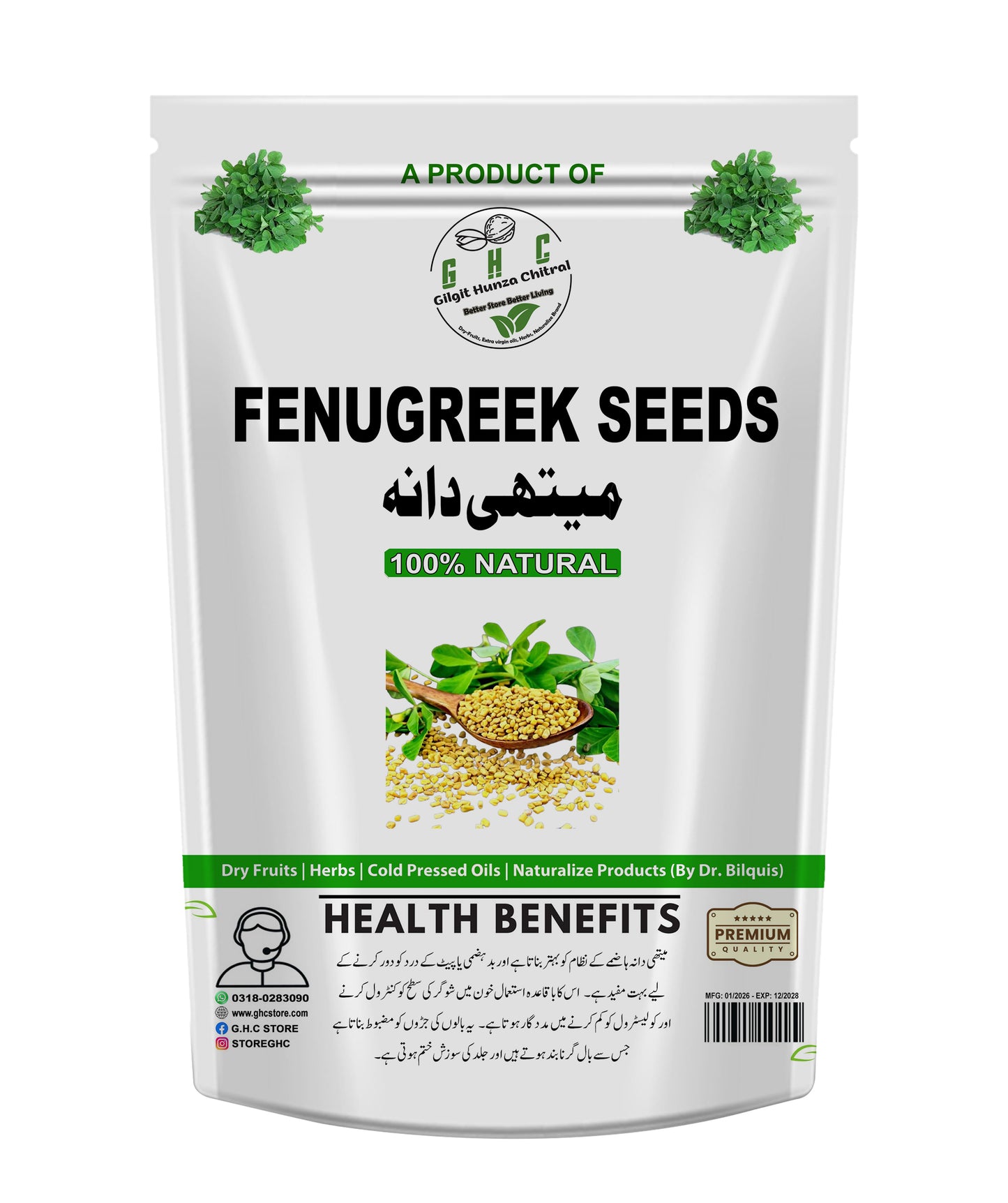
Fenugreek seeds come from the Trigonella Foenum Graecum plant and are known as Methi in Urdu. The seeds are small hard and golden yellow to amber in color with a distinctive bittersweet smell that becomes much stronger and more maple like when the seeds are lightly roasted. The taste is bitter when raw with a mild sweetness underneath that becomes more pronounced after soaking or cooking.
Fenugreek seeds have been used in both culinary and medicinal traditions across South Asia the Middle East and Mediterranean cultures for thousands of years. In Pakistan they appear in cooking as a spice and in traditional medicine as a go to seed for a remarkable range of health concerns. GHC Store carries these in pure seed form in a 200gm pack which is a practical size for regular use in both kitchen and wellness routines.
Why Fenugreek Seeds Work Across So Many Areas
The reason fenugreek appears in so many different health conversations is the diversity of its active compounds. It contains a unique soluble fiber called galactomannan which is responsible for the blood sugar and cholesterol effects. It contains saponins including diosgenin which influence hormone related effects relevant to PCOS testosterone and breastfeeding. It contains protein iron zinc and other minerals that contribute to hair and general health benefits. And it contains compounds with anti inflammatory properties that support multiple systems at once.
No single compound does everything. The broad benefit profile of fenugreek comes from all these different active components working on different systems simultaneously which is what gives it such a wide range of genuine traditional and research backed applications.
Benefits for Hair Growth and Hair Fall
This is one of the most popular uses of fenugreek seeds in this region and the results people report from consistent use are quite strong. The protein content in fenugreek seeds nourishes hair follicles directly. The nicotinic acid and lecithin in the seeds strengthen hair at the root level and reduce the brittleness that leads to breakage. The antifungal properties help address scalp conditions like dandruff that contribute to hair fall.
Applied as a paste directly to the scalp fenugreek works on hair from the outside. Taken internally through soaked seeds or seed water it works from the inside through the nutritional support it provides to the follicle environment. Both methods work and combining them produces better results than either alone.
For hair fall specifically the protein and mineral content addresses the nutritional side of hair loss which is one of the most common and most overlooked causes of ongoing shedding especially in people whose diet is low in protein and minerals.
Benefits for Blood Sugar and Diabetes
The galactomannan fiber in fenugreek seeds is one of the most studied natural compounds for blood sugar management. This soluble fiber forms a gel like substance in the digestive tract when it comes into contact with liquid which slows the absorption of glucose from food into the bloodstream. The result is a significantly gentler blood sugar response after meals than the same meal without fenugreek would produce.
For people managing type 2 diabetes or pre diabetes soaking a tablespoon of fenugreek seeds overnight and eating the seeds or drinking the water in the morning is one of the most consistent natural practices for supporting blood sugar stability through the day. The effect is gradual but measurable with regular daily use and works best alongside a low glycemic diet rather than as a standalone fix.
Benefits for PCOS
Fenugreek has become one of the most discussed natural supplements for PCOS management in recent years and the interest is justified. The diosgenin in fenugreek interacts with estrogen related pathways in the body and has shown effects on ovarian cyst reduction and hormonal balance in some studies. Women dealing with PCOS symptoms including irregular periods hormonal imbalance and difficulty managing weight often find fenugreek a useful addition to their overall management approach.
The blood sugar stabilizing effect is also directly relevant for PCOS since insulin resistance is a core feature of the condition for many women and the galactomannan fiber helps manage the insulin response that drives many PCOS symptoms.
Benefits for Breastfeeding
Fenugreek is one of the most widely recommended natural galactagogues which are substances that support milk production in breastfeeding mothers. The diosgenin content is believed to influence prolactin levels and mammary gland activity in a way that increases milk supply. Breastfeeding mothers across South Asia and the Middle East have used fenugreek preparations for this purpose for generations and it remains one of the first things suggested in traditional household advice for new mothers struggling with low milk supply.
Most women notice an increase in milk supply within one to three days of starting fenugreek which makes it one of the faster acting natural galactagogues available.
Benefits for Testosterone
For men fenugreek has attracted research interest for its effects on testosterone levels. The saponins in the seeds appear to inhibit enzymes that convert testosterone to estrogen which means more free testosterone remains available in the body. Men dealing with low energy reduced stamina or general hormonal imbalance sometimes find fenugreek a practical natural support option alongside lifestyle improvements.
The zinc content of fenugreek also supports testosterone production directly since zinc is one of the key minerals involved in that process.
Benefits for Cholesterol
The galactomannan fiber that helps with blood sugar also has a documented effect on cholesterol. It binds to bile acids in the digestive tract and helps carry them out of the body before they are reabsorbed. Since bile acids are made from cholesterol the body has to use more cholesterol to produce new bile acids which over time reduces the amount of LDL cholesterol circulating in the bloodstream. Regular fenugreek use as part of a healthy diet has been associated with meaningful reductions in LDL cholesterol over several weeks.
Benefits for Digestion
The fiber content of fenugreek seeds supports digestive regularity and gut health. The seeds also have carminative properties that help reduce gas and bloating after meals. Soaked seeds are easier to digest than raw ones and produce a gentler effect on the digestive system while still delivering the fiber benefit. For people dealing with constipation or sluggish digestion adding soaked fenugreek seeds to the morning routine tends to produce noticeable improvement in digestive regularity within a week or two of consistent use.
How to Use Fenugreek Seeds
The most common method is soaking a tablespoon of seeds in a glass of water overnight. In the morning eat the swollen softened seeds on an empty stomach and drink the water they soaked in. This is the standard preparation for blood sugar support PCOS management and general wellness use. The soaking reduces the bitterness significantly making the seeds much more palatable than eating them raw.
For hair care blend soaked fenugreek seeds into a smooth paste and apply directly to the scalp. Leave on for thirty to forty five minutes then rinse off with water and wash with mild shampoo. Once a week consistently for at least two months gives enough time to see real results in reduced hair fall and improved hair texture.
For breastfeeding support soaked seeds taken daily or fenugreek tea made from simmering seeds in water for ten minutes then straining and drinking are the two most common methods. Starting with a smaller amount and building up allows the body to adjust to the bitter taste and the effect on milk supply.
I usually soak my seeds the night before in a small glass on the counter so they are ready in the morning without any extra preparation needed. Some people find the taste off putting at first but it mellows significantly after soaking and most people adjust to it within the first few days of regular use.
How Much to Take
A tablespoon of seeds once daily is the standard amount for most uses. For blood sugar management some practitioners recommend up to two tablespoons daily but starting with one and monitoring how the body responds makes more sense before increasing. For hair care using two to three tablespoons for the paste is appropriate since this is an external application rather than internal consumption.
Who Should Be Careful
Pregnant women should avoid taking fenugreek in concentrated amounts since the uterine stimulating properties are traditional cautions during pregnancy though food amounts in cooking are fine. People on blood sugar medication should monitor their levels closely when starting fenugreek since the combined effect can sometimes bring levels lower than expected which may require medication adjustment with doctor guidance.
People with peanut or chickpea allergies should also be aware that fenugreek is in the same plant family and may trigger a cross reaction in sensitive individuals.
Storage Tips
Keep the 200gm pack in an airtight container away from moisture and direct sunlight. The seeds keep well for a long time when stored properly but exposure to humidity causes them to clump and affects the quality of the soaking preparation. A cool dry kitchen cupboard works perfectly for long term storage.
Why GHC Store
GHC Store carries Fenugreek Seeds in their pure natural form in a 200gm pack without any mixing processing beyond cleaning or added ingredients. The larger size is practical for people who use fenugreek daily for health purposes and also want to use it in cooking which makes the 200gm pack a good value for regular household use.
Final Thoughts
Fenugreek seeds are one of the most genuinely multi purpose natural seeds available in traditional herbal medicine. Hair growth blood sugar PCOS breastfeeding testosterone cholesterol and digestion all in one seed that has been trusted across cultures and generations for good reason.
The key to getting real benefit is daily consistent use over weeks rather than occasional use when the concern feels pressing. Soaking them the night before takes ten seconds and the morning routine of eating the seeds and drinking the water takes two minutes. That simplicity is part of what makes fenugreek one of the more sustainable natural health habits to maintain over the long term. That is pretty much it I guess. It always turns out a bit different for each person depending on which concern they are primarily using it for but across almost all of the traditional uses the response tends to show up consistently for people who actually commit to daily use over several weeks.
Fenugreek seeds come from the Trigonella Foenum Graecum plant and are known as Methi in Urdu. The seeds are small hard and golden yellow to amber in color with a distinctive bittersweet smell that becomes much stronger and more maple like when the seeds are lightly roasted. The taste is bitter when raw with a mild sweetness underneath that becomes more pronounced after soaking or cooking.
Fenugreek seeds have been used in both culinary and medicinal traditions across South Asia the Middle East and Mediterranean cultures for thousands of years. In Pakistan they appear in cooking as a spice and in traditional medicine as a go to seed for a remarkable range of health concerns. GHC Store carries these in pure seed form in a 200gm pack which is a practical size for regular use in both kitchen and wellness routines.
Why Fenugreek Seeds Work Across So Many Areas
The reason fenugreek appears in so many different health conversations is the diversity of its active compounds. It contains a unique soluble fiber called galactomannan which is responsible for the blood sugar and cholesterol effects. It contains saponins including diosgenin which influence hormone related effects relevant to PCOS testosterone and breastfeeding. It contains protein iron zinc and other minerals that contribute to hair and general health benefits. And it contains compounds with anti inflammatory properties that support multiple systems at once.
No single compound does everything. The broad benefit profile of fenugreek comes from all these different active components working on different systems simultaneously which is what gives it such a wide range of genuine traditional and research backed applications.
Benefits for Hair Growth and Hair Fall
This is one of the most popular uses of fenugreek seeds in this region and the results people report from consistent use are quite strong. The protein content in fenugreek seeds nourishes hair follicles directly. The nicotinic acid and lecithin in the seeds strengthen hair at the root level and reduce the brittleness that leads to breakage. The antifungal properties help address scalp conditions like dandruff that contribute to hair fall.
Applied as a paste directly to the scalp fenugreek works on hair from the outside. Taken internally through soaked seeds or seed water it works from the inside through the nutritional support it provides to the follicle environment. Both methods work and combining them produces better results than either alone.
For hair fall specifically the protein and mineral content addresses the nutritional side of hair loss which is one of the most common and most overlooked causes of ongoing shedding especially in people whose diet is low in protein and minerals.
Benefits for Blood Sugar and Diabetes
The galactomannan fiber in fenugreek seeds is one of the most studied natural compounds for blood sugar management. This soluble fiber forms a gel like substance in the digestive tract when it comes into contact with liquid which slows the absorption of glucose from food into the bloodstream. The result is a significantly gentler blood sugar response after meals than the same meal without fenugreek would produce.
For people managing type 2 diabetes or pre diabetes soaking a tablespoon of fenugreek seeds overnight and eating the seeds or drinking the water in the morning is one of the most consistent natural practices for supporting blood sugar stability through the day. The effect is gradual but measurable with regular daily use and works best alongside a low glycemic diet rather than as a standalone fix.
Benefits for PCOS
Fenugreek has become one of the most discussed natural supplements for PCOS management in recent years and the interest is justified. The diosgenin in fenugreek interacts with estrogen related pathways in the body and has shown effects on ovarian cyst reduction and hormonal balance in some studies. Women dealing with PCOS symptoms including irregular periods hormonal imbalance and difficulty managing weight often find fenugreek a useful addition to their overall management approach.
The blood sugar stabilizing effect is also directly relevant for PCOS since insulin resistance is a core feature of the condition for many women and the galactomannan fiber helps manage the insulin response that drives many PCOS symptoms.
Benefits for Breastfeeding
Fenugreek is one of the most widely recommended natural galactagogues which are substances that support milk production in breastfeeding mothers. The diosgenin content is believed to influence prolactin levels and mammary gland activity in a way that increases milk supply. Breastfeeding mothers across South Asia and the Middle East have used fenugreek preparations for this purpose for generations and it remains one of the first things suggested in traditional household advice for new mothers struggling with low milk supply.
Most women notice an increase in milk supply within one to three days of starting fenugreek which makes it one of the faster acting natural galactagogues available.
Benefits for Testosterone
For men fenugreek has attracted research interest for its effects on testosterone levels. The saponins in the seeds appear to inhibit enzymes that convert testosterone to estrogen which means more free testosterone remains available in the body. Men dealing with low energy reduced stamina or general hormonal imbalance sometimes find fenugreek a practical natural support option alongside lifestyle improvements.
The zinc content of fenugreek also supports testosterone production directly since zinc is one of the key minerals involved in that process.
Benefits for Cholesterol
The galactomannan fiber that helps with blood sugar also has a documented effect on cholesterol. It binds to bile acids in the digestive tract and helps carry them out of the body before they are reabsorbed. Since bile acids are made from cholesterol the body has to use more cholesterol to produce new bile acids which over time reduces the amount of LDL cholesterol circulating in the bloodstream. Regular fenugreek use as part of a healthy diet has been associated with meaningful reductions in LDL cholesterol over several weeks.
Benefits for Digestion
The fiber content of fenugreek seeds supports digestive regularity and gut health. The seeds also have carminative properties that help reduce gas and bloating after meals. Soaked seeds are easier to digest than raw ones and produce a gentler effect on the digestive system while still delivering the fiber benefit. For people dealing with constipation or sluggish digestion adding soaked fenugreek seeds to the morning routine tends to produce noticeable improvement in digestive regularity within a week or two of consistent use.
How to Use Fenugreek Seeds
The most common method is soaking a tablespoon of seeds in a glass of water overnight. In the morning eat the swollen softened seeds on an empty stomach and drink the water they soaked in. This is the standard preparation for blood sugar support PCOS management and general wellness use. The soaking reduces the bitterness significantly making the seeds much more palatable than eating them raw.
For hair care blend soaked fenugreek seeds into a smooth paste and apply directly to the scalp. Leave on for thirty to forty five minutes then rinse off with water and wash with mild shampoo. Once a week consistently for at least two months gives enough time to see real results in reduced hair fall and improved hair texture.
For breastfeeding support soaked seeds taken daily or fenugreek tea made from simmering seeds in water for ten minutes then straining and drinking are the two most common methods. Starting with a smaller amount and building up allows the body to adjust to the bitter taste and the effect on milk supply.
I usually soak my seeds the night before in a small glass on the counter so they are ready in the morning without any extra preparation needed. Some people find the taste off putting at first but it mellows significantly after soaking and most people adjust to it within the first few days of regular use.
How Much to Take
A tablespoon of seeds once daily is the standard amount for most uses. For blood sugar management some practitioners recommend up to two tablespoons daily but starting with one and monitoring how the body responds makes more sense before increasing. For hair care using two to three tablespoons for the paste is appropriate since this is an external application rather than internal consumption.
Who Should Be Careful
Pregnant women should avoid taking fenugreek in concentrated amounts since the uterine stimulating properties are traditional cautions during pregnancy though food amounts in cooking are fine. People on blood sugar medication should monitor their levels closely when starting fenugreek since the combined effect can sometimes bring levels lower than expected which may require medication adjustment with doctor guidance.
People with peanut or chickpea allergies should also be aware that fenugreek is in the same plant family and may trigger a cross reaction in sensitive individuals.
Storage Tips
Keep the 200gm pack in an airtight container away from moisture and direct sunlight. The seeds keep well for a long time when stored properly but exposure to humidity causes them to clump and affects the quality of the soaking preparation. A cool dry kitchen cupboard works perfectly for long term storage.
Why GHC Store
GHC Store carries Fenugreek Seeds in their pure natural form in a 200gm pack without any mixing processing beyond cleaning or added ingredients. The larger size is practical for people who use fenugreek daily for health purposes and also want to use it in cooking which makes the 200gm pack a good value for regular household use.
Final Thoughts
Fenugreek seeds are one of the most genuinely multi purpose natural seeds available in traditional herbal medicine. Hair growth blood sugar PCOS breastfeeding testosterone cholesterol and digestion all in one seed that has been trusted across cultures and generations for good reason.
The key to getting real benefit is daily consistent use over weeks rather than occasional use when the concern feels pressing. Soaking them the night before takes ten seconds and the morning routine of eating the seeds and drinking the water takes two minutes. That simplicity is part of what makes fenugreek one of the more sustainable natural health habits to maintain over the long term. That is pretty much it I guess. It always turns out a bit different for each person depending on which concern they are primarily using it for but across almost all of the traditional uses the response tends to show up consistently for people who actually commit to daily use over several weeks.
Share